

This project is investigating how glacier retreat is affecting water quality, livelihoods, and human health in Peru’s Cordillera Blanca. By combining environmental monitoring, remote sensing, health data, and participatory research with local communities, the project is helping to reveal how glacier retreat can contribute to worsening water quality through acid rock drainage and identify pathways for improving long-term water security.
Glacier retreat in the Andes of Peru is exposing rocks and sediments that can release acidic compounds and metals into rivers and streams through a natural process known as acid rock drainage (ARD). While ARD can severely affect water quality, ecosystems, agriculture, livestock, and human health, it remains poorly understood and is rarely considered in water management and climate adaptation policies. This project focuses on the Negro River catchment in Peru’s Cordillera Blanca, working closely with the farming communities of Cordillera Blanca and Canray Grande to better understand the links between glacier retreat, water quality deterioration, human health, and local adaptation strategies.
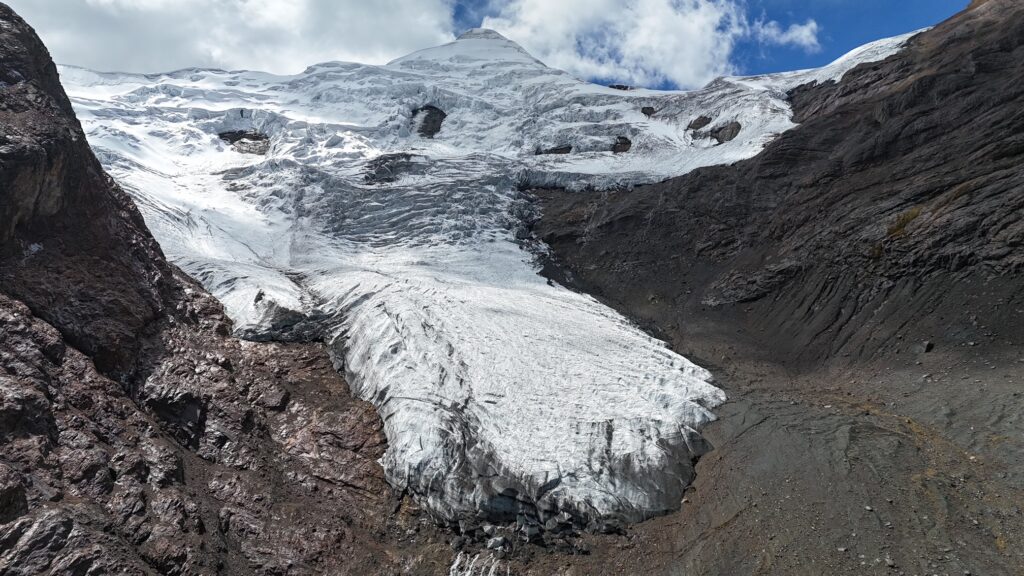
The interdisciplinary research team combines geological mapping, glacier and wetland monitoring, water quality measurements, health data analysis, interviews, participatory mapping, and adaptation assessments. Using satellite imagery and machine learning techniques, the NexGLAS team mapped glacier change in the catchment between 1986 and 2024. Their analysis revealed a total annual glacier area loss of 62 percent over the last four decades, equivalent to almost 13 km² of ice. Water quality monitoring has revealed increasingly acidic conditions in several glacier-fed sub-catchments, particularly during the dry season, while deglaciated areas generally show improved water quality. Community interviews and health data are helping to document how declining water quality and changing environmental conditions affect livelihoods, agricultural practices, and perceptions of water security.
Key Activities & Outputs
- Mapping of geological, landscape, and catchment characteristics to identify drivers of acid rock drainage.
- Machine learning-based analysis of glacier change showing a 62% loss of glacier area between 1986 and 2024, with two sub-catchments completely losing their glaciers.
- Monitoring of water quality across 55 sites in rivers, lakes, and wetlands, revealing clear seasonal patterns of acidification and declining water quality.
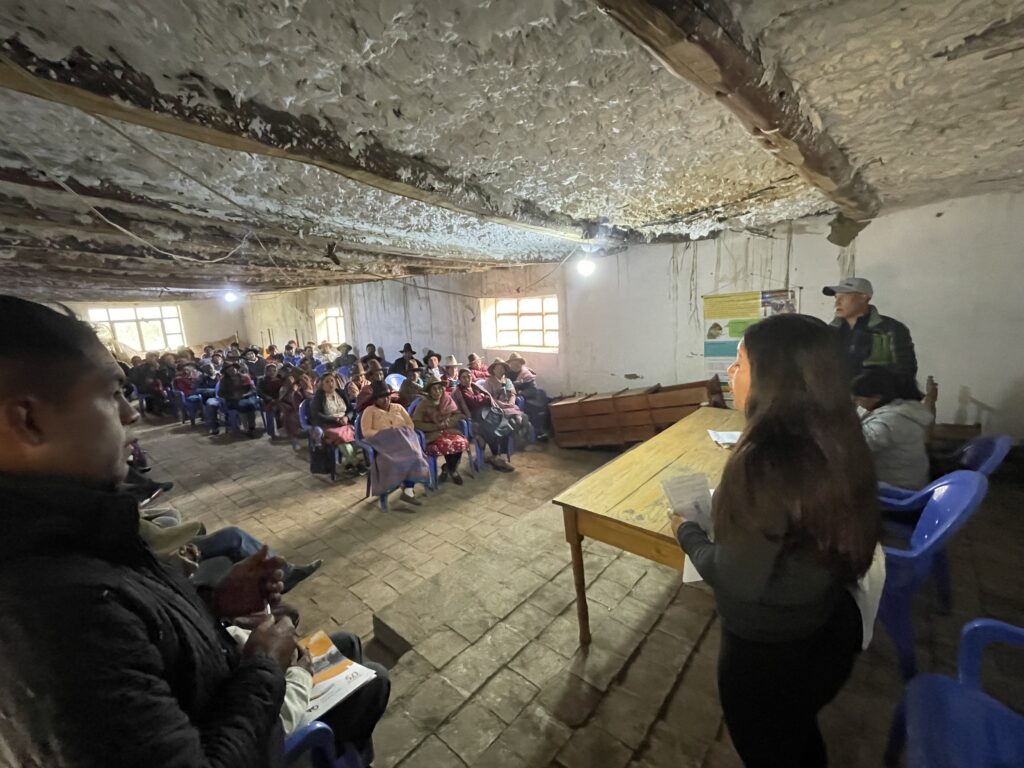
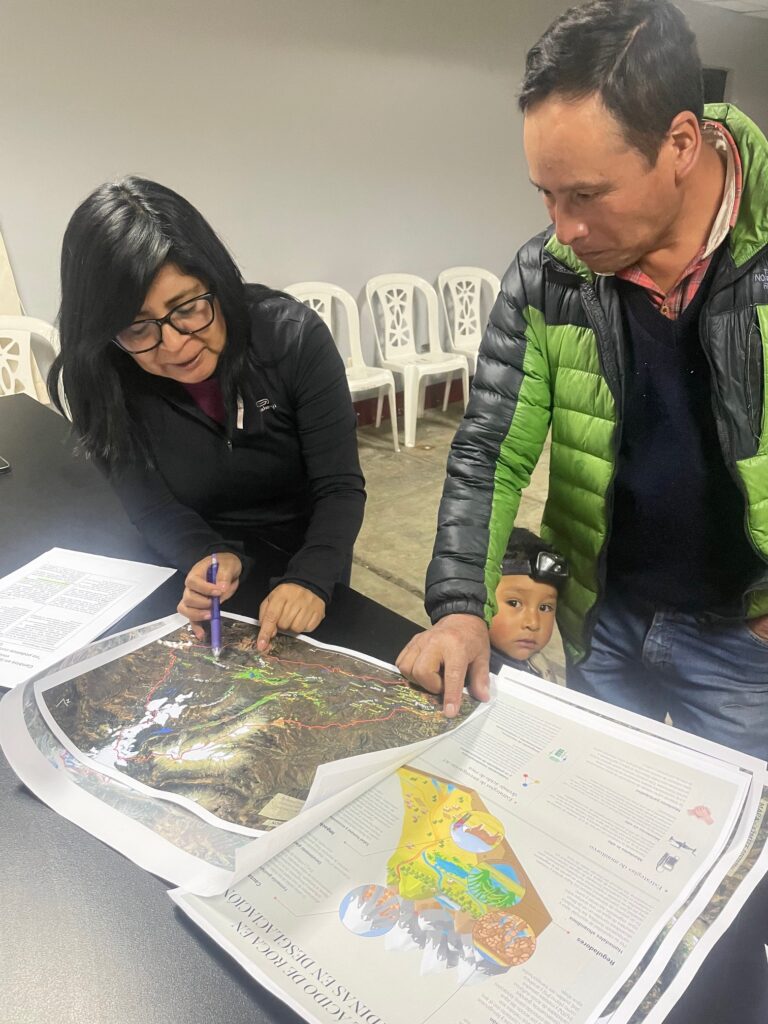
- Participatory mapping, interviews, and surveys with local communities to document water-related challenges, livelihood changes, and adaptation priorities.
- Compilation of baseline human health information, highlighting potential links between water quality concerns and gastrointestinal illnesses.
- Assessment of adaptation options, including water infrastructure and nature-based solutions such as constructed wetlands.
- Launch of an interactive bilingual (Spanish-English) web platform presenting project data, maps, monitoring results, and community information.
- Publication of the paper ‘Towards Co-Produced Water Management Pathways to Counteract Deteriorating Mountain Water Quality in the Deglaciating Peruvian Andes’ in a Special Issue of Hydrological Sciences Journal.
- Production of a policy brief (‘Adaptive Responses to Improve Water Security in the Context of Acid Rock Drainage’) and a community report (‘Sustaining Water Quality in Changing Territories’) tailored to local stakeholders.
Next Steps
Building on the initial findings of NexGLAS, the research team has secured additional funding to continue investigating water security challenges in deglaciating Andean catchments. Future work will expand monitoring of acid rock drainage and water quality, further develop the interactive web platform, strengthen understanding of links between water quality and human health, and support the co-development of locally relevant adaptation strategies.
Through new projects, including AguaSegura (2025–2029), the team will continue working with communities, practitioners, and policymakers to improve long-term water management and climate adaptation in mountain regions, while expanding research on acid rock drainage hotspots and their impacts on social-ecological systems across Peru.
Contact
Fabian Drenkhan, Pontificia Universidad Católica del Perú, fdrenkhan(at)pucp.pe
Latest Project News
-
From the Andes to East Africa: Announcing the GEO Mountains Small Grants Recipients for 2026-2027
Eight projects spanning mountain regions across Africa, Asia, and the Americas have been selected for support through the GEO Mountains Small Grants Programme 2026–2027. From rescuing historical climate observations to…
This project is supported by GEO Mountains under the Swiss Agency for Development and Cooperation (SDC), Adaptation at Altitude Programme (Project Number: 7F-10208.02.01).