

New research supported by a GEO Mountains Small Grant is shedding light on an overlooked consequence of glacier retreat in the Peruvian Andes: worsening water quality and its impacts on ecosystems, livelihoods, and human health.
The project, The Glacier-Water-Health Nexus in the Deglaciating Andes of Peru (NexGLAS), focuses on the Negro River catchment in Peru’s Cordillera Blanca – the world’s most glacierized tropical mountain region. As glaciers retreat, newly exposed rocks and sediments can release acidic compounds and metals into rivers and streams at an unprecedented pace and magnitude through a natural process known as acid rock drainage.
This process can severely affect water quality, agriculture, livestock, ecosystems, and potentially human health. Yet despite its growing importance in deglaciating mountain regions, it remains understudied and is rarely included in water management or climate adaptation policies.
With support from GEO Mountains, an interdisciplinary team of early-career researchers from the Pontificia Universidad Católica del Perú (PUCP) and Universidad Peruana Cayetano Heredia (UPCH) set out to better understand these interconnected challenges, while working closely with local communities to identify possible adaptation responses.
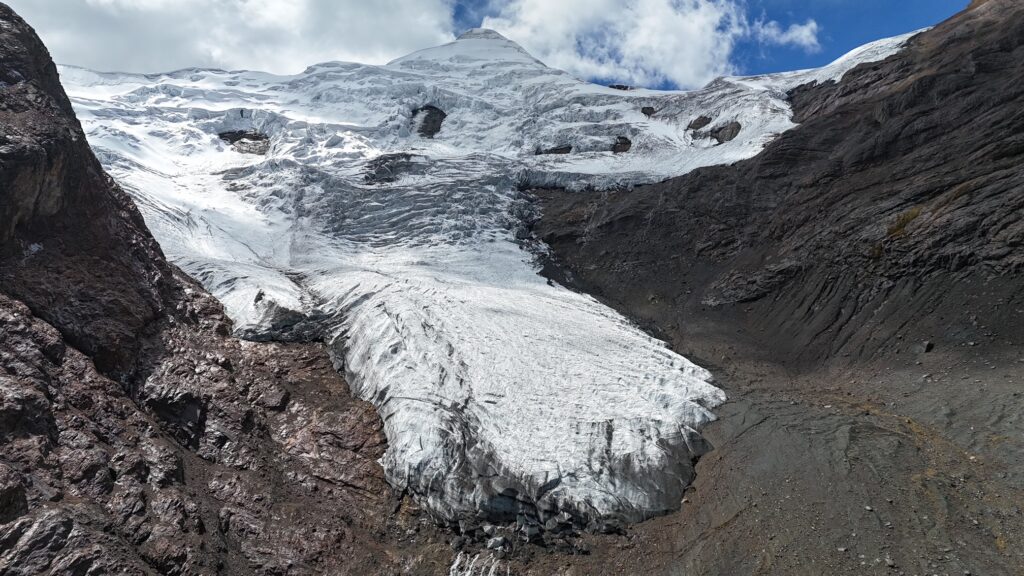
Glacier Retreat and a Changing Water Landscape
The Negro River catchment lies in the Cordillera Blanca, where glaciers and high-Andean wetlands help regulate water availability, especially during the dry season. But the landscape is changing rapidly.
Using satellite imagery and machine learning techniques, the NexGLAS team mapped glacier change in the catchment between 1986 and 2024. Their analysis revealed a total annual glacier area loss of 62 percent over the last four decades, equivalent to almost 13 km² of ice. Two sub-catchments – Quilloc and Araranca – completely lost their glaciers during this period.
At the same time, researchers monitored water quality across rivers, wetlands, and tributaries in the catchment. The results showed low water quality in several glacier-fed sub-catchments, particularly during the dry season, when high acidity levels were recorded. In contrast, ice-free sub-catchments generally showed better water quality (close to the environmental minimum quality standard of Peru), supporting the hypothesis that glacier retreat and acid rock drainage are closely linked.
Connecting Environmental Change to Everyday Life
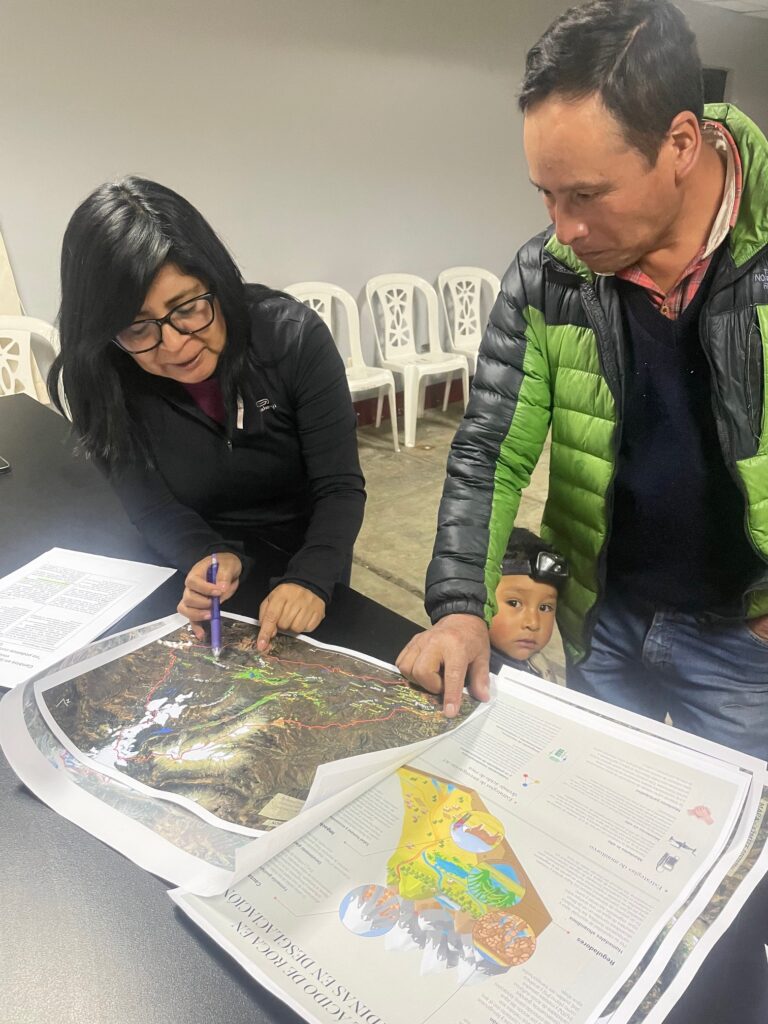
Alongside hydrological measurements and remote sensing analysis, the project also explored how changing water conditions are affecting local communities. Through interviews, participatory mapping, surveys, and workshops, researchers documented growing concerns around water quality, agriculture, and livelihoods.
According to local residents, declining water quality and less reliable water availability have contributed to a gradual shift away from traditional crop farming toward pasture and livestock activities. The project also compiled baseline health information from local healthcare facilities and community interviews, identifying gastrointestinal illnesses – often associated with water quality concerns – as one of the most common reported health problems after respiratory infections.
Together, these findings highlight how glacier retreat can trigger cascading impacts across social and ecological systems, affecting not only water resources, but also livelihoods, governance, and public health.
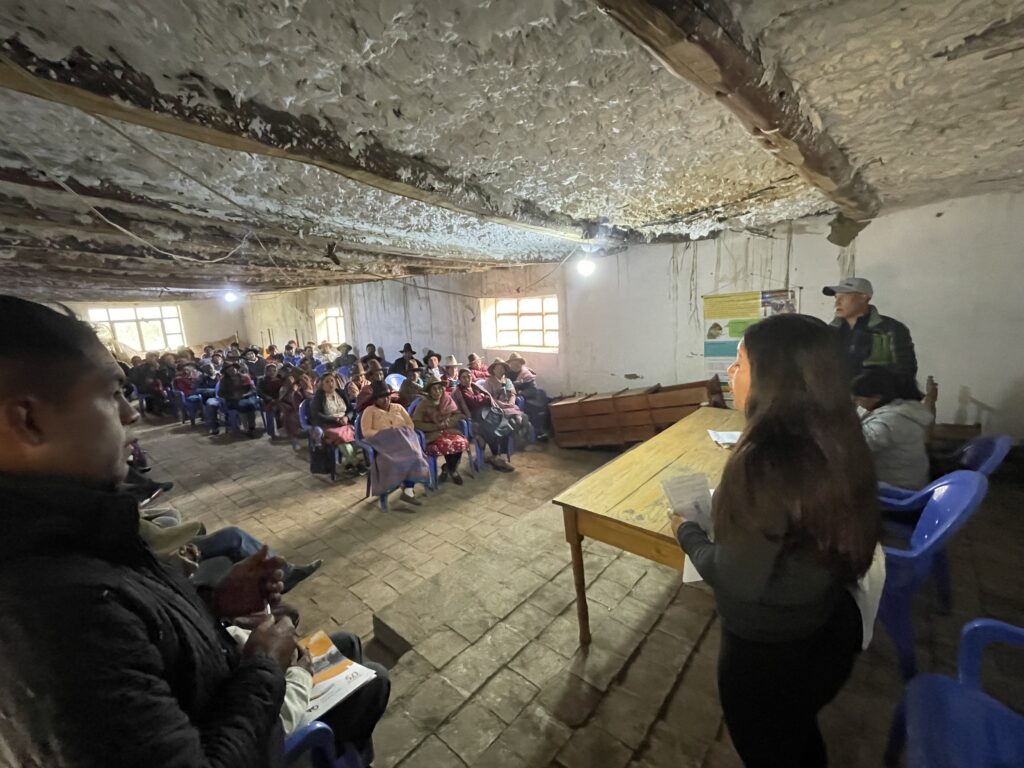
New Publication Highlights the Need for Action
One of the project’s key outputs is the publication of the paper ‘Towards Co-Produced Water Management Pathways to Counteract Deteriorating Mountain Water Quality in the Deglaciating Peruvian Andes’ in a Special Issue of Hydrological Sciences Journal in May 2026.
Bringing together the project’s scientific and community-based findings, the paper examines how glacier retreat, acid rock drainage, water quality deterioration, and local water governance are interconnected in the Negro River catchment. It highlights the importance of combining hydrological research with local knowledge and participatory approaches to better understand and respond to climate-related water risks in mountain regions.
The study also underlines the urgent need for long-term monitoring, stronger coordination between water and health governance, and adaptation strategies that are locally grounded and socially sustainable.
Beyond the scientific publication, the project produced an interactive bilingual web platform and a stakeholder report designed to make findings more accessible and relevant for local communities and decision-makers. The stakeholder report, Adaptive Responses to Improve Water Security in the Context of Acid Rock Drainage, presents many of the project’s findings in plain language and visual formats tailored to local audiences.
Looking Ahead
The NexGLAS project demonstrates how glacier retreat is not only a story of disappearing ice, but also one of changing water security, livelihoods, and health in mountain communities.
By combining scientific monitoring with participatory approaches and open-access tools, the project is helping build a more integrated understanding of climate risks in the Andes while strengthening collaboration between researchers, communities, and institutions.
Importantly, this work is continuing. Building on this GEO Mountains-supported initiative, the research team has already secured additional funding to expand research on water security, governance, and acid rock drainage in deglaciating catchments across Peru.
“Support from the GEO Mountains Small Grants programme helped us bring together hydrological research, local knowledge, and participatory approaches to better understand the impacts of glacier retreat on water quality and human well-being in the Peruvian Andes,” says project lead Fabian Drenkhan of the Pontificia Universidad Católica del Perú. “We are especially proud that this project not only contributed to a new scientific publication, but also supported practical tools and community-focused outputs that can help strengthen local decision-making and long-term water security.”